Why a Habit Needs a Cue, Not Just Good Intentions
A habit cue links an intended action to a familiar moment, helping you see when to begin and choose a clear first move that fits your day.
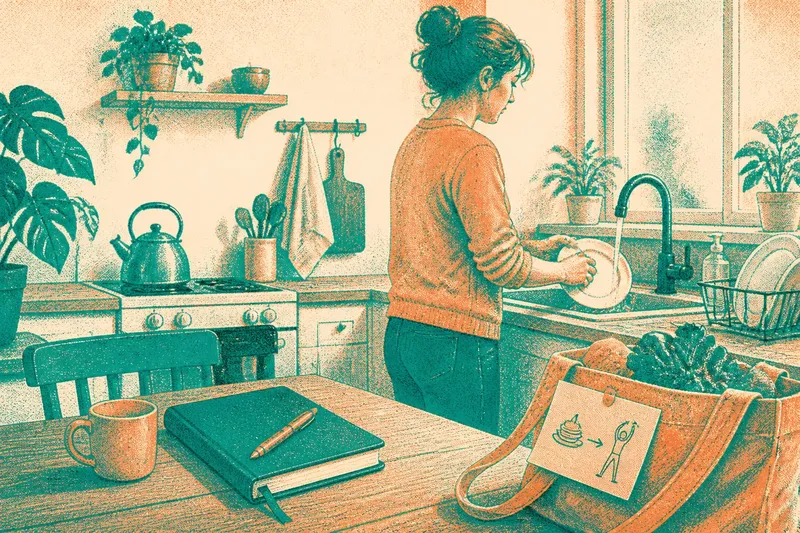
You set a notebook beside the kettle, then remember it after the tea is gone and the morning has moved on. A habit cue gives that intention a specific place in your day: a familiar moment that points to one clear action.
Forgetting does not tell you how much you care. It may simply mean the plan had no recognizable starting point among the other things happening. A cue gives it one.
What does a habit cue actually do?
A habit cue is a signal that reminds you to begin a particular action. It might be a time, a place, an object, or something you already do, such as closing your laptop or putting a mug in the sink.
The cue is not the action. It is the moment you recognize as the point to start. “Read more” is a wish; “after I put my lunch container in the sink, I open my book at the table” names a cue and a first move.
That distinction can make a plan easier to act on, but it does not ensure the action will happen. Interruptions, changing schedules, and competing needs still count as part of the day.
Why can good intentions be hard to remember?
“I’ll practice drawing this week” leaves the start time unsettled. Each time you consider it, you must remember the plan, find an opening, and decide what to do first. A cue narrows that decision: after a named event, the first move is already chosen.
Compare “I should draw more” with “after I put my keys in the bowl, I open the sketchbook on my desk.” The second sentence gives you a moment and an action rather than a small lecture about discipline.
How do you choose a cue that fits?
Begin with a moment you already notice, rather than building a new schedule around the habit. An existing action may be easier to recognize than a clock time if your day’s hours shift.
- Check the moment: If you can name an event you reliably notice, such as closing your work laptop, use it; if the cue is a broad stretch like “after work,” choose a sharper event.
- Check the setting: If the action can happen where the cue occurs, keep the pairing; if not, move the cue or choose a location where the action is possible.
- Check the first move: If it is one visible action, such as opening a book, keep it; if it contains several tasks, reduce it to the first clear move.
- Check the materials: If what you need is nearby, keep the arrangement; if not, place the item where the action will happen or choose a cue near it.
- Check for interruption: If the moment is usually available, try it; if another responsibility often takes over, select a different moment rather than treating the conflict as a character flaw.
- Check the cue type: If a steady time fits your day, use a time; if your hours shift, try an existing action or a visible object instead.
Say you want to write a brief note about the day, but remember only at bedtime, when the notebook is elsewhere. You choose washing your dinner plate as the cue, put a notebook and pen on the kitchen table, and write one sentence after the plate is away. The expected observable result is that the cue arrives with the materials in view and the first move clear; if dishes are often interrupted, the arrangement may not fit, so choose a quieter existing moment instead.
What makes a cue too vague or too ambitious?
“When I have time” is not an event you can recognize as it happens. “In the morning” may also be too broad if the order of your morning keeps changing.
A cue can be clear while the response is too large for that moment. If closing your laptop is supposed to trigger a long workout, try naming a smaller first move, such as changing into comfortable clothes, if it supports your intention. The point is to make the beginning identifiable, not to pretend that the rest of the action requires no effort.
Put the plan in one sentence: “After I ___, I will ___.” If the first blank is hard to picture or the second contains several tasks, revise the pairing.
Which kind of cue suits your routine?
A time cue can suit a steady schedule. An object cue, such as a water glass beside the sink, is visible only if you encounter it where the action can happen. An action cue—“after I feed the cat, I water the windowsill herbs”—uses an existing event as a boundary.
A location can also serve as a cue, such as pausing at the park gate, but that depends on visiting the place. Choose the kind that matches how your day is actually organized. No special device or elaborate phrase is required; a cue you notice is more useful than one that looks tidy in a planner.
What should you check when a cue is not working?
What if I did not notice the cue?
Make the event or object easier to notice, or attach the action to a more distinct moment. A reminder hidden behind the coffee tin is doing a fine impression of a non-reminder.
What if I noticed the cue but could not act?
Check whether the needed materials were available and whether the action fit the setting. Move the materials or choose a cue that arrives when the action is possible.
What if another responsibility keeps interrupting?
Choose a different moment that is less likely to conflict. If no moment is consistently free, keep the action flexible and use a cue when a suitable opening appears rather than adding blame to a crowded day.
What if the cue is clear but starting still feels difficult?
Name a smaller first move, such as opening the sketchbook rather than deciding to “draw more.” If the action still does not fit, reconsider the cue or the action instead of treating the plan as a test of character.
Imagine you plan to stretch after arriving home, but carrying groceries straight to the kitchen means you pass the intended moment. You move the cue to putting away the last grocery item and place a note beside the bag. The expected observable result is a reminder at a moment when your hands are free; if unpacking remains busy, choose another event that fits better.
How can you tell whether a habit cue helps?
Look for a practical difference at the start: you notice the intended moment, find the needed object, or know the first move without searching for an opening. If you want a record, a brief note on paper can show which part of the pairing is getting missed; detailed tracking is optional.
Ask whether you noticed the cue, whether the action was possible there, and whether the first move was clear. A “no” points to a specific adjustment. Change the cue, setting, materials, or first move that seems to be in the way.
You do not need to inspect the arrangement constantly. Check it after ordinary opportunities to see whether the moment and action still fit, then adjust if the routine has changed.
Can a habit cue make the action automatic?
A cue can make an action easier to remember, but it does not remove choice or make the action inevitable. If you still have to negotiate with yourself, clarify the first move or make the opening action smaller.
“After I sit down with tea, I open the novel” is more direct than “read more often.” If the tea routine disappears, choose a new cue that belongs to the day you have now.
What if your routine changes?
A changed commute, work schedule, or household arrangement can remove an old cue. Keep the intended action if it still matters to you, then look for a replacement moment you actually encounter.
For a habit cue to help, it needs to belong to a real part of your day. Name a moment you notice, connect it to one clear first action, and put the needed materials where that action can happen. The last useful check is whether the pairing still fits the day you have, not the one your planner assumed.